Hidden Cost of Slow File Sharing in Environmental Consultancy Projects

Slow file sharing in environmental consultancy projects leads to missed deadlines, higher costs, and client frustration. Common causes include outdated hardware, overloaded networks, and poorly integrated tools. By auditing systems, prioritising quick fixes, and improving integrations, consultancies can speed up collaboration and deliver projects more reliably.
McKinsey estimates that using modern collaboration tools can raise knowledge-worker productivity by 20–25%.
What You’ll Learn
Why Slow File Sharing Hurts Environmental Consultancies Most
For environmental consultancies, collaboration is at the heart of every project. Reports, plans, and survey outputs flow between staff in the office, field teams, contractors, and local authorities. When systems run smoothly, projects move forward with confidence. When file sharing slows, the whole workflow starts to creak.
For small to mid-sized consultancies, these delays are particularly damaging. Unlike larger firms with IT teams to firefight issues, environmental SMEs often rely on overstretched project managers or office staff to troubleshoot. Meanwhile, project deadlines tied to planning submissions or ecological survey windows don’t wait.
In this environment, “just a slow upload” can be the difference between hitting a milestone or missing it entirely.
The Real-World Impact of File Sharing Delays
Slow systems don’t just frustrate staff. They ripple outward, affecting delivery, client relationships, and future opportunities.
Example 1: Lost confidence. A consultancy with 40 staff struggled for days to circulate a critical report update because uploads kept timing out. The document was eventually submitted shortly after deadline day, but the client’s confidence was shaken. For the next tender, they selected a competitor.
Example 2: Costly overtime. A team of project managers found themselves staying late each week to deal with version conflicts caused by slow syncing. Not only did this mean unplanned overtime, but it also introduced mistakes into key documents.
Example 3: Strained relationships. Contractors grew frustrated when project files took hours to arrive, forcing them to delay site work. Trust between partners was eroded, even though the consultancy had done nothing wrong technically.
What looks like “just a slow system” often has very human consequences.

The Hidden Costs You Might Not Be Counting
- Financial costs. Overtime payments, extended contractor hire, and even penalty clauses for missed milestones.
- Opportunity costs. Overrunning projects reduce your ability to bid for new work or meet tender deadlines.
- Reputation costs. Clients and partners begin to see you as less reliable, which can tip the balance in competitive bidding.
- Staff costs. Morale drops when staff spend more time waiting on systems than doing their jobs. Over time, this leads to disengagement and higher turnover.
Each of these costs eats into margins and growth potential. They may not appear in a monthly IT invoice, but they are felt in lost tenders, strained staff, and missed deadlines.
Common Causes of Slow File Sharing in Consultancy Projects
In our research, we found recurring patterns that make environmental consultancies especially vulnerable to file sharing delays .
- Ageing laptops and office PCs – Older machines struggle with modern software, particularly under deadline pressure.
- Overloaded VPN or cloud storage – Systems not sized for peak demand buckle when multiple teams need access at once.
- Poor integration – Project management, reporting, and storage tools that don’t “talk” to each other create version conflicts and delays.
- Unmanaged devices – Field staff often work from laptops or home devices without standardised setup or monitoring.
These aren’t just IT problems, they are project delivery risks. The NCSC recommends that SMEs standardise device management and apply consistent security updates to avoid hidden risks.
How to Improve File Sharing Speed Without Major Disruption
The good news is that fixing slow file sharing doesn’t mean ripping everything out and starting again. A structured approach can deliver quick wins and long-term improvements.
- Audit current bottlenecks – Map where delays happen. Is it uploads from the field, syncing between offices, or version mismatches? Quantify how much time is lost.
- Prioritise quick wins – Often, replacing outdated devices or optimising your current cloud setup can resolve 80% of the pain. Focus first on the highest-friction points.
- Smarter integration – Connect your project management tools with document storage so updates happen automatically. This reduces duplication and errors.
- Plan capacity for peaks – Ensure your systems are sized not just for “average” days but for the busiest points in your project cycle.
- Proactive monitoring – Regular performance checks mean slowdowns are identified and fixed before they become deadline risks.
This is about small, strategic steps and not disruptive overhauls.
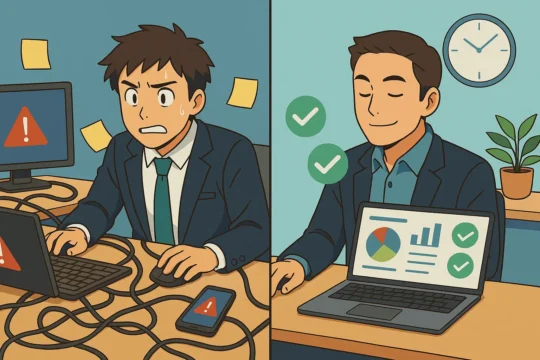
From Slow to Strategic: The Competitive Advantage
When file sharing works seamlessly, the benefits are bigger than convenience:
- Projects complete on or ahead of schedule.
- Clients and contractors see you as dependable, building trust and repeat business.
- Staff focus on their expertise, not fighting with technology.
In a market where tenders are won or lost on reliability, fast, dependable collaboration becomes a strategic advantage.
Why This Matters Now
For environmental consultancies, slow file sharing is more than an IT frustration. It’s a risk to project delivery, profitability, and reputation. Left unchecked, it drains margins and erodes client confidence.
But with the right approach, a calm audit, targeted quick fixes, and structured integration, consultancies can eliminate these hidden costs and deliver projects with confidence.
Your Next Step
At CYAN, we specialise in helping environmental consultancies move from firefighting to predictable, reliable delivery.
If slow systems are holding back your projects, let’s talk about a performance review designed to speed up collaboration, reduce delays, and protect client trust.
Let’s start the conversation →
Leave Slow Systems Behind
At CYAN, we help environmental consultancies replace frustrating delays with calm, reliable systems. With a clear performance review and structured fixes, your projects can flow smoothly without IT stress holding you back.